Contact Seller
Spencelayhs Of Cambridgeshire
Tel07493 123205Please quote Antiques Atlas.

 Great 19th century painting signed C. Huber
 The Grand Canal Venice Huge Oil Painting On Panel
 Portrait of a Lady Oil on Canvas C.1840
 Religious oil painting on canvas Saint Bartholomew
 Circus Act Cyclist — Lyrical Surrealism Painting
 “Naval Consultation” — Oil on Canvas by Leonard D.
 Great 19th Century Painting Portrait Of A Lady
 Antique Italian painting Marriage of the Virgin
 Oil Painting of Shrimp Fishing on Horseback c.1970
 Landscape painting by Francesco Pablo de Besperato
 Antique Italian Magdalene painting 17th century
 Antique Italian landscape painting signed 1881
Non UK callers :
+44 7493 123205
Theophile de Bock oil on canvas Hague School



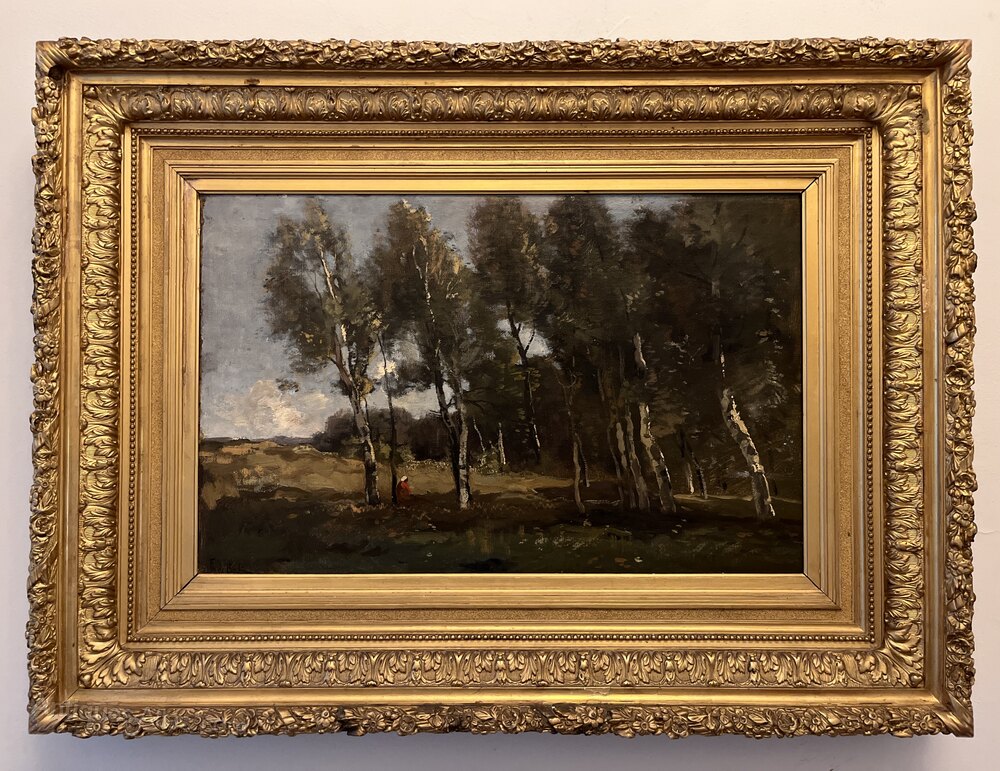
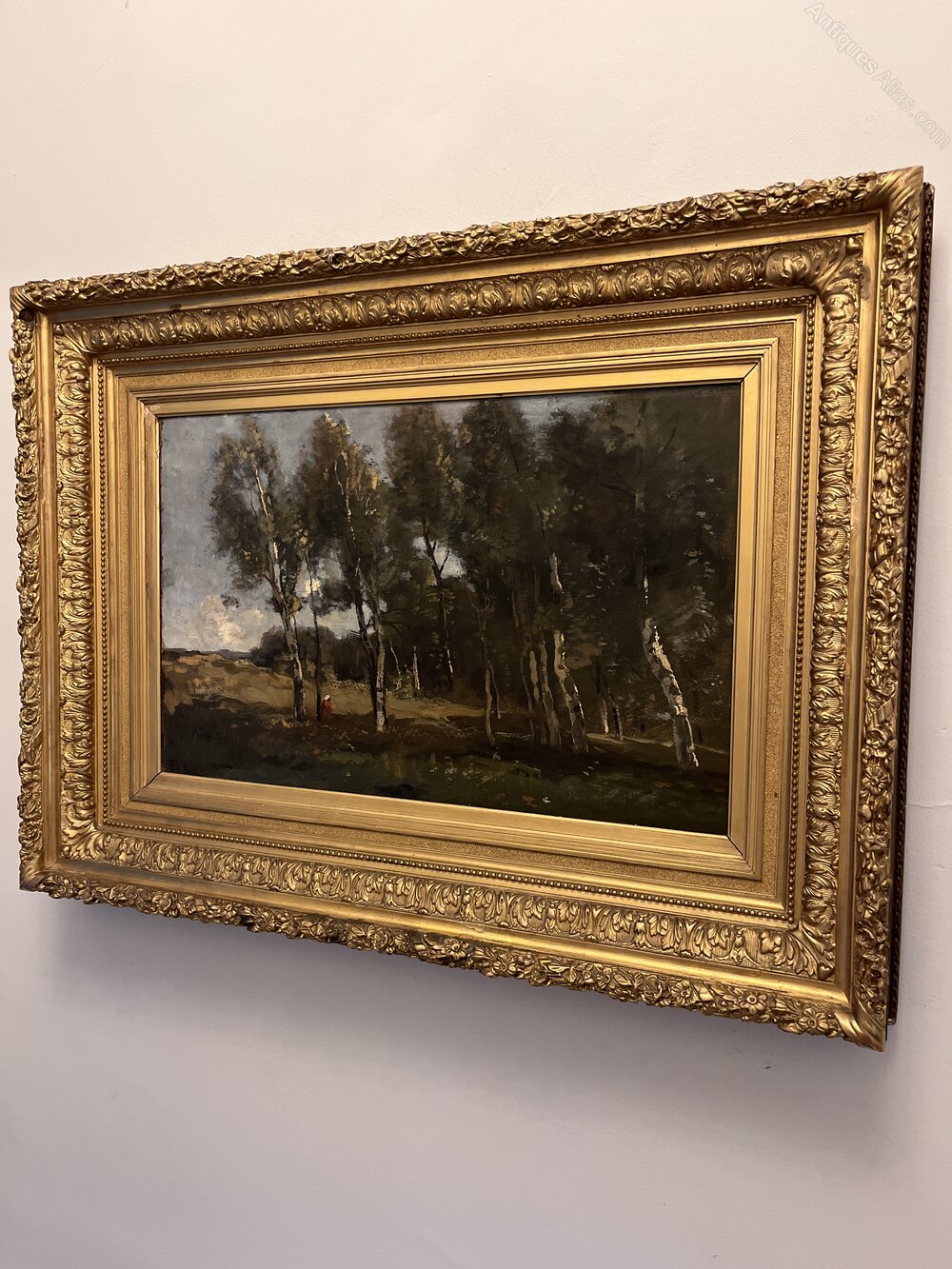
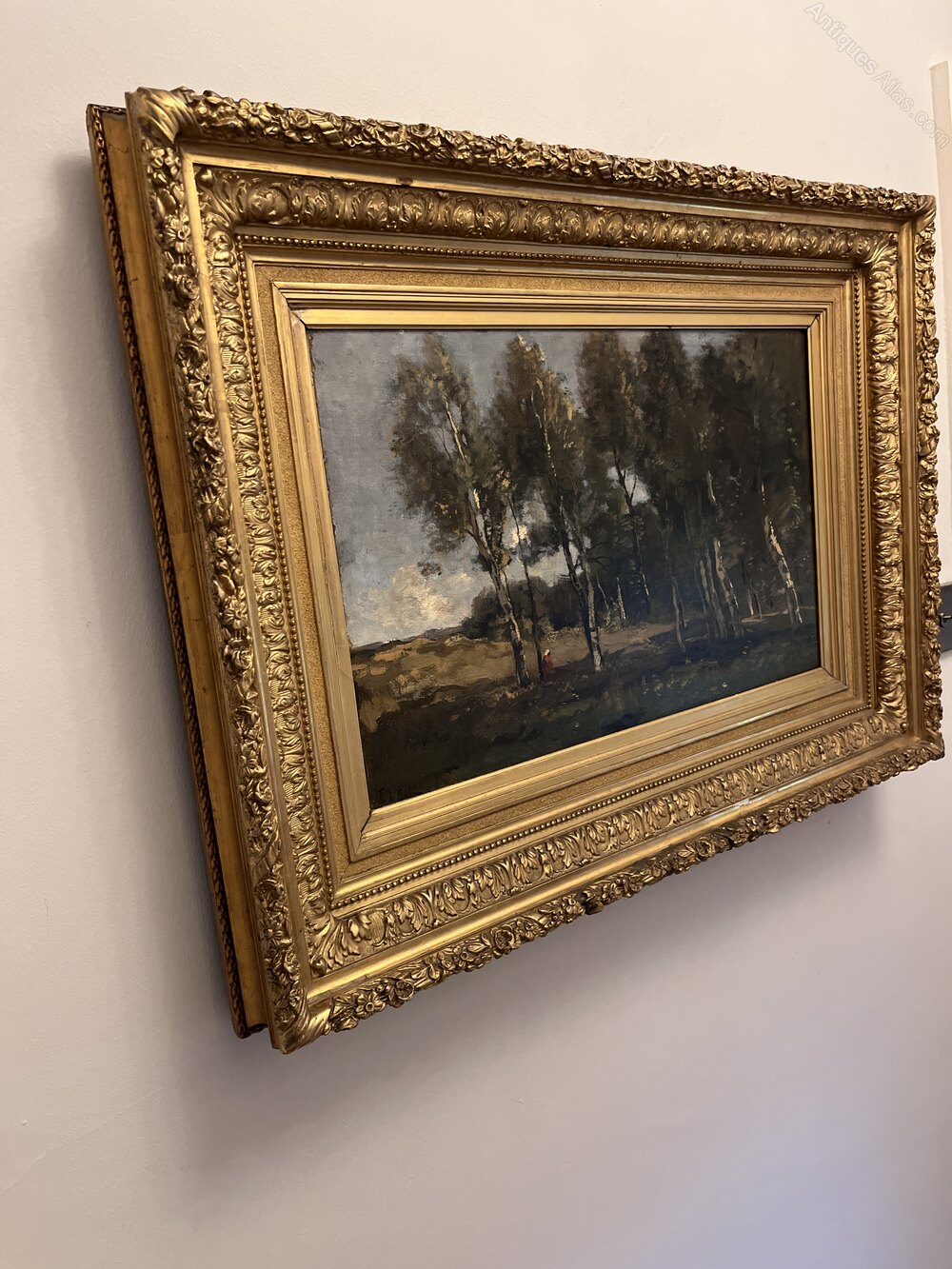
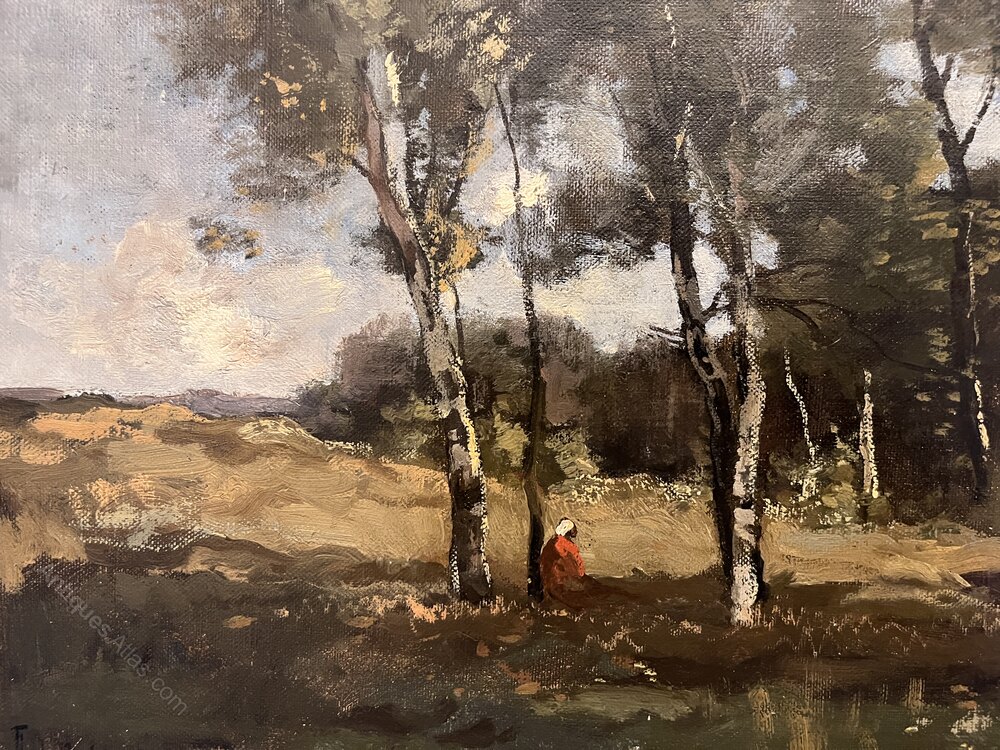
Théophile Emile Achille de Bock 1851 - 1904
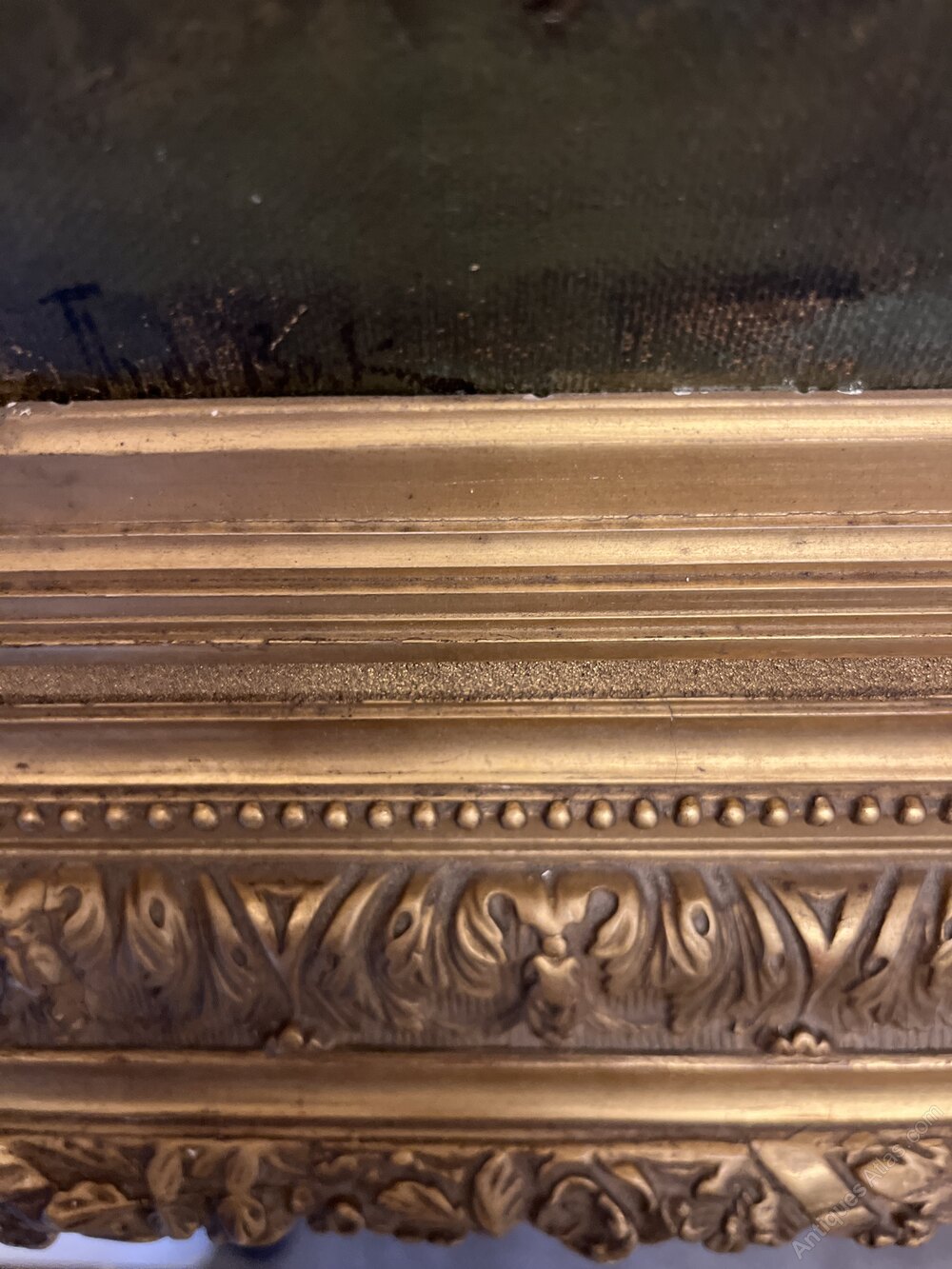
Frame 84.5cm x 63.25cm x 8cm
Canvas 60.5cm x 38.5cm
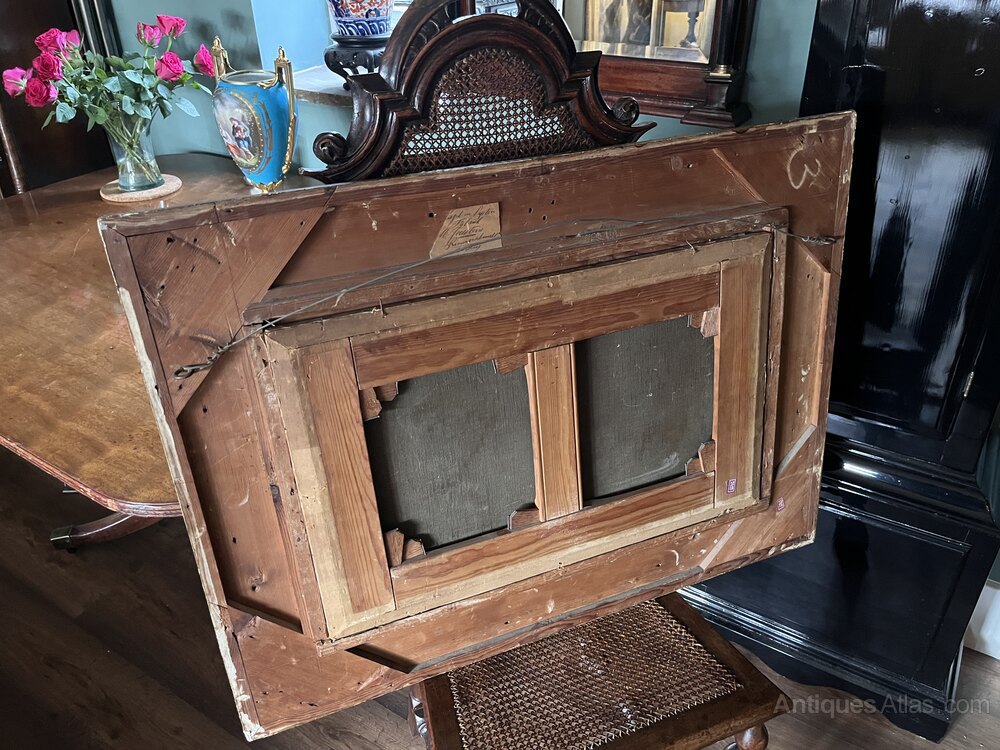
Oil on canvas laid to deep stretcher mounted in its very substantial and original gilt frame.
Signed lower left ‘Th. de Bock’
‘Female sat at the edge of a birch wood’
Label verso:
Spiegel en Lijsten Fabrik
M. Toosten (?)
Riviervischmarkt
den Haag”
Mirror and frame factory
M. Toosten
River Fish Market
The Hague
Biography of Théophile Emile Achille de Bock
Théophile de Bock began his working life with the Railways, but his real passion lay elsewhere: he spent so much time drawing and painting on duty that his job came to an abrupt end. After this false start he fell under the patronage of the writer Johan Kneppelhout, who quickly recognised De Bock’s gifts as a landscape painter. Their relationship, however, was not without friction. De Bock soon grew weary of his patron’s interference and chose to make his own way. He trained first with J.W. van Borselen in The Hague and later with the renowned J.H. Weissenbruch, though it was Jacob Maris who ultimately shaped him most deeply.
When Maris returned from Barbizon in 1872, having worked en plein air in the forests of Fontainebleau, De Bock became a regular visitor to his studio. It was in this context that his enduring love for woodland and dune scenes was formed. A devoted admirer of the French Barbizon School, especially Camille Corot, De Bock himself spent the years 1878–1880 in Barbizon. The experience left a clear imprint on his painting, and he went on to find his favourite motifs in the nature of the Veluwezoom around Oosterbeek and Renkum in the Netherlands.
De Bock learned quickly and worked tirelessly.
At just 21, he saw his first painting accepted for the Living Masters exhibition in The Hague. Between 1877 and 1881 he shared a studio in The Hague with fellow artists Tony Offermans and Jozef Neuhuys. During a study trip to France he met Vincent van Gogh, and their acquaintance deepened between 1881 and 1883 when Van Gogh was based in The Hague.
In correspondence with his brother Theo, Van Gogh spoke approvingly of De Bock’s strong “painter’s temperament” and remarked that he had “not yet said his last word” as an artist, though he was more critical of De Bock’s attempts at figure painting. In the social and artistic life of The Hague, De Bock was a well-liked clubman and natural organiser. When the Pulchri Studio refused to show the work of progressive painters such as Van Gogh, it was De Bock who helped to found the Haagse Kunstkring as an alternative exhibiting body. He also belonged to Arti et Amicitiae in Amsterdam and to the Hollandsche Teekenmaatschappij. His career prospered: his landscapes – often sold while the paint was still wet – found ready buyers not only in the Netherlands but also in England, the United States and Canada. Hendrik Willem Mesdag entrusted him with painting the sky and dunes in the celebrated Panorama Mesdag.
Following a period in Diepenveen, with excursions to the Zuiderzee and Zwartsluis that he later described as his “shipwright yard period”, De Bock spent much of the late 1880s working in the Oranjerie of Castle Doorwerth, which he regarded as his “summer residence”. In 1895 he and his family settled in nearby Renkum, where he became honorary chairman of the artists’ association Pictura Veluvensis. His significance for the province of Gelderland lies above all in his evocation of the Veluwe landscape. The Veluwezoom had already attracted painters in the mid-19th century, with J.W. Bilders as a key figure, but in the final quarter of the century the area around Oosterbeek, Renkum and Wolfheze once again exerted a strong pull. Around De Bock, a new artists’ colony grew up there. In 1902 he moved to Haarlem, remarking that “Gelderland had in the end become rather heavy.” He died in Haarlem in 1904 at the age of 53.
Item sent Worldwide, secure tracked service.
Current other subjects available include:
Workshop - circle of Jan Metsys
(Ill matched lovers)
Karl Kaufmann- Cairo
Portrait of Sir Edward Nicholas
(Secretary of State King Charles I & II)
SellerSpencelayhs Of Cambridgeshire
View all stock from
Spencelayhs Of Cambridgeshire

 Private dealer
By appointment only
Cambridgeshire
England, UK
Tel : 07493 123205
Non UK callers : +44 7493 123205
Frame 84.5cm x 63.25cm x 8cm
Canvas 60.5cm x 38.5cm
Oil on canvas laid to deep stretcher mounted in its very substantial and original gilt frame.
Signed lower left ‘Th. de Bock’
‘Female sat at the edge of a birch wood’
Label verso:
Spiegel en Lijsten Fabrik
M. Toosten (?)
Riviervischmarkt
den Haag”
Mirror and frame factory
M. Toosten
River Fish Market
The Hague
Biography of Théophile Emile Achille de Bock
Théophile de Bock began his working life with the Railways, but his real passion lay elsewhere: he spent so much time drawing and painting on duty that his job came to an abrupt end. After this false start he fell under the patronage of the writer Johan Kneppelhout, who quickly recognised De Bock’s gifts as a landscape painter. Their relationship, however, was not without friction. De Bock soon grew weary of his patron’s interference and chose to make his own way. He trained first with J.W. van Borselen in The Hague and later with the renowned J.H. Weissenbruch, though it was Jacob Maris who ultimately shaped him most deeply.
When Maris returned from Barbizon in 1872, having worked en plein air in the forests of Fontainebleau, De Bock became a regular visitor to his studio. It was in this context that his enduring love for woodland and dune scenes was formed. A devoted admirer of the French Barbizon School, especially Camille Corot, De Bock himself spent the years 1878–1880 in Barbizon. The experience left a clear imprint on his painting, and he went on to find his favourite motifs in the nature of the Veluwezoom around Oosterbeek and Renkum in the Netherlands.
De Bock learned quickly and worked tirelessly.
At just 21, he saw his first painting accepted for the Living Masters exhibition in The Hague. Between 1877 and 1881 he shared a studio in The Hague with fellow artists Tony Offermans and Jozef Neuhuys. During a study trip to France he met Vincent van Gogh, and their acquaintance deepened between 1881 and 1883 when Van Gogh was based in The Hague.
In correspondence with his brother Theo, Van Gogh spoke approvingly of De Bock’s strong “painter’s temperament” and remarked that he had “not yet said his last word” as an artist, though he was more critical of De Bock’s attempts at figure painting. In the social and artistic life of The Hague, De Bock was a well-liked clubman and natural organiser. When the Pulchri Studio refused to show the work of progressive painters such as Van Gogh, it was De Bock who helped to found the Haagse Kunstkring as an alternative exhibiting body. He also belonged to Arti et Amicitiae in Amsterdam and to the Hollandsche Teekenmaatschappij. His career prospered: his landscapes – often sold while the paint was still wet – found ready buyers not only in the Netherlands but also in England, the United States and Canada. Hendrik Willem Mesdag entrusted him with painting the sky and dunes in the celebrated Panorama Mesdag.
Following a period in Diepenveen, with excursions to the Zuiderzee and Zwartsluis that he later described as his “shipwright yard period”, De Bock spent much of the late 1880s working in the Oranjerie of Castle Doorwerth, which he regarded as his “summer residence”. In 1895 he and his family settled in nearby Renkum, where he became honorary chairman of the artists’ association Pictura Veluvensis. His significance for the province of Gelderland lies above all in his evocation of the Veluwe landscape. The Veluwezoom had already attracted painters in the mid-19th century, with J.W. Bilders as a key figure, but in the final quarter of the century the area around Oosterbeek, Renkum and Wolfheze once again exerted a strong pull. Around De Bock, a new artists’ colony grew up there. In 1902 he moved to Haarlem, remarking that “Gelderland had in the end become rather heavy.” He died in Haarlem in 1904 at the age of 53.
Item sent Worldwide, secure tracked service.
Current other subjects available include:
Workshop - circle of Jan Metsys
(Ill matched lovers)
Karl Kaufmann- Cairo
Portrait of Sir Edward Nicholas
(Secretary of State King Charles I & II)
Price
Click here to message the seller The price has been listed in British Pounds.
Conversion rates as of 2/DEC/2025. Euro & Dollar prices will vary and should only be used as a guide.
Always confirm final price with dealer.
Category Antique Pictures / Engravings / Art
> Antique Oil Paintings
Period Mid Victorian Antiques
Origin Dutch
Item code as1111a245
Status For Sale
£2850.00 
$3762.29
€3241.59

$3762.29

€3241.59

Looking to Buy?
Arrange a final price and delivery details directly with the dealerClick here to message the seller
Conversion rates as of 2/DEC/2025. Euro & Dollar prices will vary and should only be used as a guide.
Always confirm final price with dealer.
View all stock from
Spencelayhs Of Cambridgeshire

 Private dealer
By appointment only
Cambridgeshire
England, UK
Tel : 07493 123205
Non UK callers : +44 7493 123205
You may also be interested in
 Great 19th century painting signed C. Huber
 The Grand Canal Venice Huge Oil Painting On Panel
 Portrait of a Lady Oil on Canvas C.1840
 Religious oil painting on canvas Saint Bartholomew
 Circus Act Cyclist — Lyrical Surrealism Painting
 “Naval Consultation” — Oil on Canvas by Leonard D.
 Great 19th Century Painting Portrait Of A Lady
 Antique Italian painting Marriage of the Virgin
 Oil Painting of Shrimp Fishing on Horseback c.1970
 Landscape painting by Francesco Pablo de Besperato
 Antique Italian Magdalene painting 17th century
 Antique Italian landscape painting signed 1881

Websites for Antiques Dealers
Promote your stock and business
Read our testimonials
Read our testimonials